Bowfishing means shooting fish with a bow and a heavy arrow tied to a line, then reeling the fish in. You can do it with a crossbow too: add a reel, a line and fish arrows (often called bolts), and you have a bowfishing rig that doesn’t need to be held at full draw. This guide covers whether it’s legal where you live, the gear you need, how to shoot safely, and how to hit fish under the water.
We haven’t tested the gear below for this article. Specs come from the makers, and stock was checked on Amazon on October 4, 2026.
First, check that it’s legal where you fish
Bowfishing rules are set by each state, and crossbows are often treated differently from regular bows. Some states allow crossbows for bowfishing, some limit when or where, and some don’t allow them at all. Rules also cover which fish you can shoot (usually nongame or “rough” fish, rarely game fish like bass or trout), which waters are open, whether you need a fishing license or a special permit, shooting at night with lights, and what you must do with the fish afterward. Look up the current fishing regulations from your state’s fish and wildlife agency before you buy anything. Our page on crossbow hunting qualifications and safety training explains where to find official rules.
Crossbow or regular bow?
A crossbow has real advantages for bowfishing. You don’t have to hold the bow drawn while you wait for a fish to turn, and people who can’t draw a bow comfortably can still take part. It’s also steady and easy to aim.
The downsides are just as real. Every follow-up shot means cocking the crossbow again, while a bowfisher with a regular bow can shoot again in seconds. A full-size hunting crossbow is heavy to swing at moving fish, and its power is far more than you need at close range. That’s why many crossbow bowfishers prefer a compact, lower-powered crossbow for the water.
The gear you need
- A reel. Bottle reels (also called retriever reels) hold line in a closed container and let it pay out freely as the arrow flies. You reel in with a crank. Spincast-style reels look like fishing reels and are cheaper. Hand-wrap drum reels are the simplest but slowest.
- A reel mount. Crossbow kits usually attach through the quiver mounting holes or to an accessory rail. Check that the mount fits your model before buying.
- Line. Bowfishing line is heavy braided line, often rated well over 100 lb, so it won’t snap when a big fish runs or the arrow sticks in a log.
- Fish arrows. They’re heavy, usually solid fiberglass, without normal fletching, and have barbed points that hold the fish. Regular hunting bolts are not suitable. See our crossbow bolts guide for hunting arrows.
- A safety slide or ring. This connects the line to the arrow so the line stays in front of the bow when you shoot. It’s the most important safety part of the rig.
- Polarized sunglasses. They cut the glare on the water so you can see fish, and they protect your eyes.
- Optional: gloves for handling fish and line, and lights if night bowfishing is legal where you are. Most bowfishing shots are close, so a magnified scope isn’t needed. Many bowfishers aim with a red dot or the open sights. Our crossbow scope guide covers scopes for hunting.
Safety rules
- Never shoot with the line wrapped around anything: the bow, the limbs, your arm or the boat. A snagged line can snap the arrow back toward you.
- Keep the line in front of the limbs and string, and check it’s clear of the cams before every shot.
- Make sure the line is tied to the safety slide or ring, following the kit instructions, not to the arrow shaft itself.
- Keep the crossbow uncocked while moving and cock it only when you’re ready to shoot. Point it at the water, away from people.
- Watch for ricochets. Arrows can skip off rocks or shallow bottoms.
- Be sure of your target. Shoot only fish you can identify as legal.
- Wear a life jacket when bowfishing from a boat.
How to hit fish
Aim low
Water bends light, so a fish is deeper than it looks. Aim lower than where you see it. The farther away the fish is, and the deeper, the lower you need to aim. Some bowfishers start with the “10-4” rule, aiming about 4 inches low for a fish 10 feet away and 1 foot deep, then adjust from experience. Practice on a target under the water to learn your setup.
Get close
Most bowfishing shots are close, often 10 to 20 feet. Line drag and water slow the arrow quickly, and close shots let you judge refraction much better. Move slowly and quietly, keep your shadow off the fish, and wait for it to stop or turn broadside.
Bring it in
After a hit, keep tension on the line and reel or pull the fish in steadily. Don’t grab the line with bare hands while a big fish is running. Remove the arrow by unscrewing or flipping the barbs, as your point is designed to do.
What to shoot and what to do with it
Common bowfishing targets include carp, gar, buffalo and suckers, depending on state rules. Common carp is an invasive species in much of the U.S., and many anglers see removing it as a benefit to native fish. Treat every fish with respect. Eat what you can (many of these fish are good eating when prepared well), use the rest as garden fertilizer, or dispose of it the way your state requires. Don’t leave fish on the bank or throw them back dead where that’s not allowed.
Two crossbow bowfishing setups
Both of these were in stock new on Amazon. The first turns your crossbow into a bowfishing rig. The second is a compact crossbow you can set up for bowfishing.
- Kit for your crossbow: AMS Bowfishing Crossbow Carp Kit. A bottle reel, mount and three bolts, under $400.
- Compact crossbow for the water: Ballista BAT. A light pistol crossbow, under $300, with a bowfishing kit sold separately.
1. AMS Bowfishing Crossbow Carp Kit: best kit for your crossbow
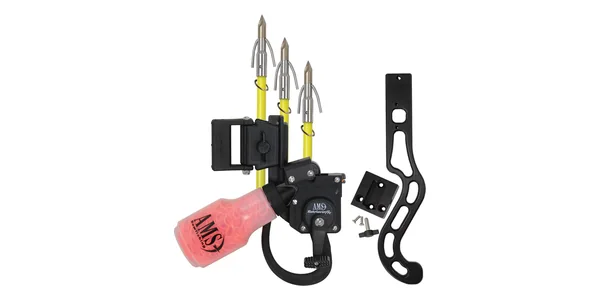
AMS is one of the best-known bowfishing brands, and this kit has everything you need to fit to a crossbow. You get AMS’s Retriever Pro bottle reel loaded with 25 yards of 200 lb braided Dacron line, the Sleek-X mount, and three 24-inch solid fiberglass Chaos FX bolts. Instead of a separate safety slide, the bolts use AMS’s Ring System, where the line ties to a ring on the shaft.
Fit is the thing to check. AMS says the mount fits crossbows with standard quiver mounting holes 1 5/16 inches apart (center to center). For a crossbow with a Picatinny rail, you need AMS’s M109-PCT adapter, sold separately. This listing is the right-hand version.
It was sold by a third-party seller and shipped by Amazon, with only 3 left. If you already have a mount, the AMS Retriever Pro reel is sold on its own.
2. Ballista BAT: best compact crossbow for the water
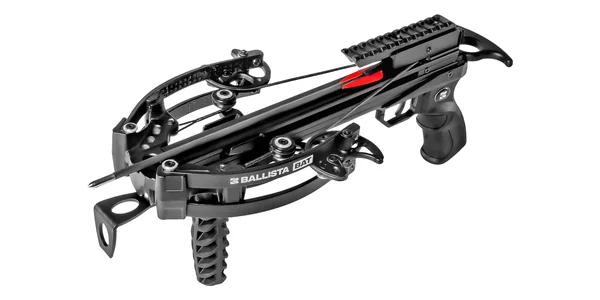
A full-size hunting crossbow is a lot to swing at a moving carp. The BAT is a compound pistol crossbow that weighs about 2.5 lb and is about 16 inches long. Ballista rates it at 130 lb draw weight and up to 300 fps, plenty for fish at close range. It cocks with a pull rod, so follow-up shots are quicker than with a heavy hunting bow, and it’s also a fun target bow.
To fish with it, you need a kit. Ballista’s crossbow bowfishing kit includes a spincast reel, an aluminum reel mount with sleeve, a quick-release ring mount for 20 mm rails and three 16-inch fiberglass arrows. It was sold by a third-party seller. The listing says it fits the BAT and crossbows with a compatible 20 mm rail. Check your state’s rules on pistol crossbows as well as crossbow bowfishing.
The BAT was sold by a third-party seller and shipped by Amazon.
The bottom line
Bowfishing with a crossbow is a fun way to spend a summer day on the water and a good way to remove invasive carp. Check your state’s rules first, set up a proper reel, line and fish arrows, keep the line in front of the bow, and aim low. The AMS Crossbow Carp Kit is the proven way to convert the crossbow you already own. If you’d like a light, dedicated bow for the water, the Ballista BAT with its bowfishing kit is an affordable option.
Looking for a hunting crossbow? See our best crossbows guide and our Barnett crossbow reviews.