Best Crossbow Hunter

Crossbow Comparisons and Reviews

  • Home
  • Best Crossbows
  • Best Bargain
  • Reviews
    • Barnett Ghost 410
    • Excalibur Matrix 355
    • Barnett Jackal
    • Barnett Crossbows
    • TenPoint Crossbows
    • Parker Crossbows
    • Recurve Crossbows
    • Largest Crossbow Collection
  • Guides
    • Crossbow Scope
    • Most Accurate Crossbow
    • How Deadly Is a Crossbow?
    • Safety Training
    • Bowfishing
    • Jackal Crank Cocking Device
  • Bolts
  • Youth

How to Decock (Uncock) a Crossbow Safely Without Dry-Firing

by Kenny Fox

Learning how to uncock a crossbow safely is as important as learning to shoot one. At the end of a hunt you have a bow under hundreds of pounds of tension and a bolt that can kill. You can’t just unload it like a rifle. The safe ways to decock a crossbow are short and simple. The unsafe ones are how people get hurt and bows get wrecked.

Start with your manual. Your crossbow maker says which methods are approved for your bow, and that beats any general guide, including this one.

Two things never to do

  • Never dry-fire. Shooting without a bolt sends all the energy into the limbs, string and cams. It can break the bow and hurt you, and it usually voids the warranty.
  • Never let the string down by hand or with a rope cocker. If your hand or the rope slips, the string will slam forward with your fingers in its path. Most makers warn against it in plain words.

How to uncock a crossbow: the three safe options

1. A de-cocking crank or built-in system

Some crossbows can be let down under control. Examples are TenPoint’s ACUslide and the “De-Cock” versions of some TenPoint and Wicked Ridge bows, plus some add-on cranks such as Excalibur’s Charger EXT used with its Fail-Safe Strap. Follow the manual step by step: bolt out first, hand on the crank, slow and steady. If your crank isn’t described as a de-cocking device, don’t use it as one. Our guide to the best crossbow cocking devices shows which ones can de-cock.

2. A de-cocking bolt into soft ground

This is the most common method in the field. A de-cocking or discharge bolt is made to hit the dirt over and over, so you don’t ruin a hunting bolt. Barnett tells you to aim at a clear patch of ground at about 45 degrees. TenPoint says to aim into soft, rock-free ground about 3 to 4 feet in front of you. The steps:

  • Point the bow in a safe direction and keep the safety on.
  • Keep your fingers below the rail, and slide the hunting bolt out.
  • Load the de-cocking bolt, with the nock and fletching set the way your manual says, seated against the string.
  • Pick a spot of soft, rock-free ground with nothing beyond it. No rocks, water, frozen ground or hard soil, where a bolt can glance off.
  • Aim, take the safety off and shoot. Check the bolt for damage before you use it again.

3. A field-point bolt into a discharge target

A small discharge bag at the truck or camp lets you shoot a regular field-point bolt into a target instead of the ground, and you get your bolt back. Use field points only, never broadheads, in these bags. Check that the bag is rated for your bow’s speed.

De-cocking bolts and targets

Each of these was in stock new on Amazon when we checked on October 4, 2026. Specs are from the makers. Make sure the bolt meets your bow’s minimum weight and nock type; a light or wrong-nock bolt can act like a dry-fire.

Barnett Evac De-Cocking Bolts (5-pack)
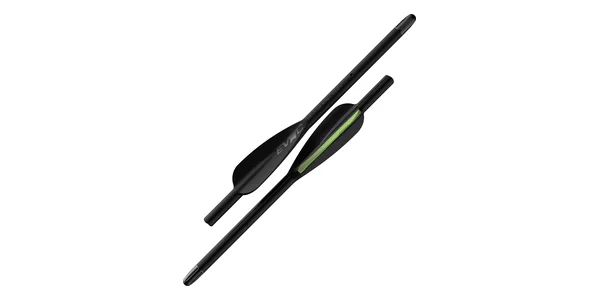
Barnett Evac De-Cocking Bolts

Evac bolts weigh 500 grains, glow in the dark to help you line up the fletching and nock, and snap into Barnett’s lightweight quiver. The listing calls them single-use, five to a pack, and says they are not for Barnett’s Hyper series. Barnett’s instructions say to load the Evac green fletch down.

They come in a five-pack, sold by a third-party seller and shipped by Amazon.

Check price on Amazon

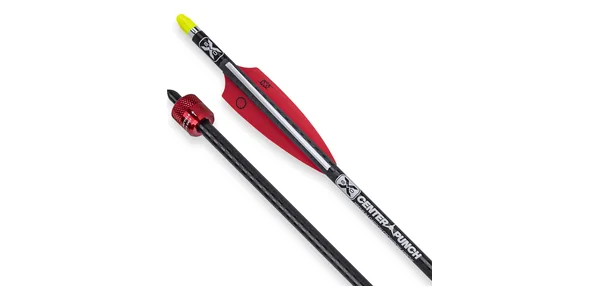
TenPoint Crossbow Discharge Arrow

TenPoint Crossbow Discharge Arrow

This is a reusable 20-inch carbon arrow that weighs 590 grains. It comes with an Alpha-Nock HP, an aluminum bushing, a discharge collar and a field tip, and it is built to take repeated shots into the ground. TenPoint says it fits any TenPoint, Wicked Ridge or Horton crossbow that shoots a 20-inch arrow, and most crossbows that need flat, moon or capture nocks.

It was sold by a third-party seller and shipped by Amazon.

Check price on Amazon

Morrell Yellow Jacket Final Shot discharge target
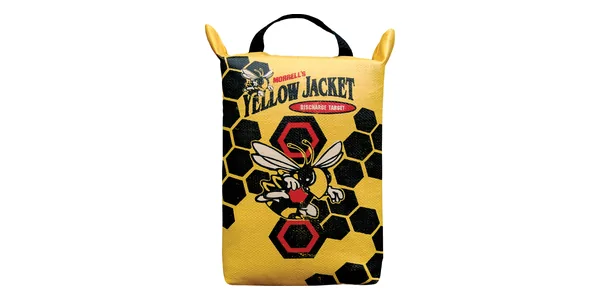
Morrell Yellow Jacket Final Shot Discharge Target

Morrell made the Final Shot to unload a crossbow at the end of the day. It is a 9-pound, 10 x 8 x 15-inch bag with 53 layers, rated to stop 500 fps with field points only. It is weather-resistant and has a carry handle. Morrell says not to use it with outserts or field points wider than the shaft. The linked listing is a 2-pack.

It was sold by a third-party seller.

Check price on Amazon

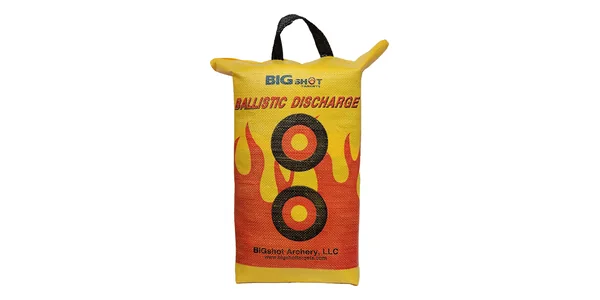
BIGshot Ballistic Discharge Bag

BIGshot Ballistic Discharge Bag Target

BIGshot rates its discharge bag to stop crossbows up to 505 fps, using a multi-layered ballistic core. It is meant to ride in a truck bed and is for field points only. The listing gives the size as 18 x 10 x 8 inches and the weight as about 10 pounds.

It was sold by a third-party seller.

Check price on Amazon

Why this matters

A crossbow bolt carries enough energy to pass through a deer, so treat every cocked bow as loaded, and every unload as a real shot. If you want the numbers, see how deadly a crossbow is. Many states also have rules about cocked or loaded crossbows in vehicles and after legal hours. Our page on crossbow hunting safety training covers where to look them up.

Quick answers

Can I just leave it cocked overnight? Some makers allow it for a limited time and some don’t. Check the manual. Even when it is allowed, the bow should be unloaded, with no bolt on the rail. Unloading at the end of each day is the safer habit.

Can I uncock a crossbow with a rope cocker? No. A standard rope cocker is for cocking only. Use one of the three methods above.

Is it bad to shoot a hunting bolt into the ground? It can bend or crack the shaft and dull or break a broadhead. That is why de-cocking bolts exist. Never shoot a broadhead into the ground or a discharge bag.

Stock above was checked on Amazon on October 4, 2026, and it changes often. Specs are from the makers.
Filed Under: Hunting Tips

How to Sight In a Crossbow Scope (Step by Step, 20 to 50 Yards)

by Kenny Fox

If you want to know how to sight in a crossbow, the short version is: zero the top reticle at 20 yards, then check every other line at its distance. The details matter, though, because a crossbow scope is calibrated for one speed and one bolt weight. A loose ring or a bolt that is a few grains off will show up as a miss at 40 yards.

This step-by-step works for the usual crossbow scopes: multi-reticle scopes with fixed aiming lines or dots, and speed-dial scopes that move the lines to match your bow. Always follow your scope’s and crossbow’s manuals where they differ from this guide.

What you need

  • Bolts that match. Use the bolts you hunt with, with field points of the same weight as your broadheads (usually 100 grains). Number them, so you can spot one that flies off.
  • A target rated for your speed. A field-point bag is fine for the first groups. For the broadhead check you need a foam target rated for broadheads at your bow’s speed.
  • A steady rest. A shooting bench with a rest or sandbags takes your form out of the test. Do not shoot off-hand while you zero.
  • A safe range. Have a clear backstop, a measured 20, 30, 40 and 50 yards, and a plan to unload the bow when you are done.

Before the first shot

  • Check that the rings and the mount are tight. Torque them to the maker’s spec if one is given.
  • Set the eyepiece so the reticle is sharp, and set the magnification you will hunt with. On a speed-dial scope, set the ring to your crossbow’s rated speed, or to a chronograph reading if you have one.
  • If the scope has a parallax or illumination setting, set it now so it does not change mid-session.

How to sight in a crossbow, step by step

Step 1: Get on paper at 10 yards

A new scope can be several inches off. Shoot one bolt at 10 yards using the top crosshair. If it hits the target, move back to 20 yards. If it misses, adjust before you move back.

Step 2: Zero the top reticle at 20 yards

Shoot a group of three bolts at the bull with the top crosshair. Measure from the center of the group to the bull, not from your best shot. Then turn the turrets: elevation moves the group up or down, windage left or right. Most turrets are marked with the direction the impact moves.

Check the click value. Many crossbow scopes list it at 100 yards, so at 20 yards one click moves the impact only one-fifth as far. That is why the first adjustment often takes a lot of clicks. Shoot another three-bolt group, adjust, and repeat until the group centers on the bull.

Step 3: Check the lower lines at 30, 40 and 50 yards

On a multi-reticle scope, each line or dot below the top one is meant for the next 10 yards: 30, 40, 50 and so on. Shoot a group at each distance with its line. Do not touch the turrets now. If a line hits high or low, note it, or use the line that fits. The lines are spaced for a certain speed, and your bow may be a little faster or slower.

On a speed-dial scope, leave the 20-yard zero alone. Shoot at 40 or 50 yards with the matching line, then turn the speed ring until that line hits. Check the in-between lines once more. Write down the speed setting that works.

Step 4: Confirm your broadheads

Field points and broadheads of the same weight should hit close together. Fixed heads are the most likely to wander. Screw your hunting heads onto the same bolts and shoot them into a broadhead-rated target at 20 yards and at your longest hunting distance. If they group with your field points, you are done. If not:

  • Spin-test each head on its bolt and replace any that wobble.
  • Try another bolt; some shafts just do not like broadheads.
  • If the broadhead group is tight but in a different spot, zero with the broadheads instead and use practice heads of the same weight.

Need heads that fly well at crossbow speed? See our picks for the best crossbow broadheads.

A target for the job

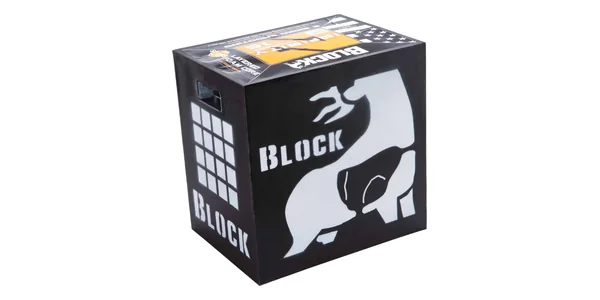
BLOCK Infinity Crossbow Target

One foam target that stops both field points and broadheads saves you from buying two. The BLOCK Infinity Crossbow is a six-sided layered-foam cube rated for standard crossbow bolts up to 520 fps with field points and fixed or expandable broadheads. Its six faces spread out the wear, and it has a carry handle. The linked listing is the 16 x 16 x 16-inch size; a 20-inch version is also made.

It was sold by a third-party seller, with 9 left in stock when we checked on October 4, 2026.

Check price on Amazon

Common sight-in problems

  • Groups open up as you shoot. Check the scope rings, the rail and the string. A loose ring will move the zero with every shot.
  • One bolt keeps missing. Spin it, check the nock and the insert, and set it aside if it still flies wild.
  • The lower lines are all a little high or low. On a multi-reticle scope, your bow’s speed does not match the scope’s spacing. Learn which line fits each distance, or move to a speed-dial scope.
  • The zero moves from day to day. Check for a stretching string or a cable that has crept. A string that has not been waxed or changed in a few seasons is a common cause.

When to re-check your zero

Shoot a few bolts after any trip in a vehicle, after a fall, after a string or cable change, and before every season. It takes 10 minutes and saves a lost deer. If you are thinking about a better scope, start with our guide to whether you need a crossbow scope and what kind to buy. For the rest of the setup, read what makes an accurate hunting crossbow.

Finish safely

Never dry-fire a crossbow, and never try to let the string down by hand. When the session is over, unload the bow by shooting a field-point bolt into the target or with your crossbow’s de-cocking system, as the manual says.

Target stock above was checked on Amazon on October 4, 2026, and it changes often. Specs are from the maker.

Filed Under: Hunting Tips

How Deadly Is a Crossbow? Power, Range and Safety Explained

by Kenny Fox

The short answer: very. A modern hunting crossbow can kill a deer cleanly, and it can kill or badly injure a person, so it has to be handled with the same care as a firearm. But a crossbow is not a rifle. It kills by cutting rather than by impact, it works best at close range, and it only kills cleanly when the arrow goes in the right place. This guide explains how much power a crossbow really has, how it kills, how far it’s effective, and how to stay safe with one.

This guide has no products or affiliate links. It was last updated on October 4, 2026.

Why crossbows have a deadly reputation

Crossbows changed medieval warfare because they took far less training than a longbow. A soldier with a few weeks of practice could shoot a heavy bolt hard enough to wound an armored knight. The Church was uneasy about the weapon: the Second Lateran Council of 1139 is often cited as condemning the use of crossbows and bows against Christians. Medieval crossbows were slow to reload, though, and modern hunting crossbows are far more powerful and accurate.

How a crossbow kills

A rifle bullet kills largely through shock and the damage of a high-speed impact. An arrow doesn’t. A broadhead kills by cutting through vital organs and blood vessels, so the animal loses blood quickly and dies, ideally within seconds. That has three consequences:

  • Shot placement matters most. An arrow through the heart and lungs kills quickly. An arrow in the stomach or a leg can leave a wounded animal that’s never found.
  • The broadhead must be sharp. A dull or damaged broadhead cuts less and penetrates less. Use broadheads made for crossbows and replace damaged blades.
  • Penetration matters more than raw energy. An arrow that passes right through leaves two holes and a better blood trail. Arrow weight, broadhead design and a well-tuned bow all help.

How much power does a crossbow have?

Arrow energy is usually given as kinetic energy in foot-pounds (ft-lb). To work it out, multiply the arrow’s weight in grains by its speed in feet per second squared, then divide by 450,240. Some typical figures:

  • Hunting crossbow at 400 fps with a 400-grain arrow: about 142 ft-lb.
  • Hunting crossbow at 350 fps with a 400-grain arrow: about 109 ft-lb.
  • Hunting compound bow shooting a 400-grain arrow at 300 fps: about 80 ft-lb.

A widely cited guideline, published by arrow maker Easton among others, suggests about 25 to 41 ft-lb for deer-sized game, 42 to 65 ft-lb for elk, black bear and wild boar, and more than 65 ft-lb for the toughest game. Most modern hunting crossbows are well above the top of that range at the bow, which leaves plenty in reserve for deer at normal hunting distances.

Is a crossbow as powerful as a rifle?

No. You’ll sometimes read that a fast crossbow is “close to a .223 rifle”. It isn’t. A common .223 Remington load leaves the barrel at more than 3,000 fps with roughly 1,200 ft-lb of energy, about eight times a fast crossbow, and it stays effective much farther. The reason a crossbow still kills cleanly is that a sharp broadhead doesn’t need that energy. It needs enough to cut through the vitals and, ideally, out the other side.

Is a crossbow deadlier than a compound bow?

At the bow, most hunting crossbows carry more energy than most compound bows, and they’re easier to shoot accurately because you don’t have to hold the string back. But both kill the same way, with a sharp broadhead, and an arrow from a properly set-up compound is plenty for deer. A crossbow’s effective range is a little longer, mainly because it’s steadier to aim with a scope. The bigger difference is how easy a crossbow is to use, which is one reason states don’t all treat crossbows the same as vertical bows.

How far is a crossbow deadly?

An arrow slows and drops much faster than a bullet. A fast crossbow arrow takes about a third of a second to cover 40 yards, and in that time a nervous deer can flinch or drop at the sound. Small errors in judging distance also grow with range. That’s why most experienced crossbow hunters keep shots on game to about 40 yards or less, and many prefer 30.

The arrow is still dangerous far beyond that. A crossbow arrow that misses, or passes through an animal, can fly a long way and still injure someone. Always know what’s behind your target. Your realistic hunting range is the distance at which you can put every arrow in the vital area from a hunting position. Our guide to the most accurate hunting crossbow explains how to stretch that range safely, and our crossbow scope guide explains how to sight in for each distance.

How to make a clean kill

  • Wait for a broadside or quartering-away shot and aim for the heart and lungs, just behind the front leg. Avoid shots at the head, neck or rear, and at deer facing straight at you.
  • Shoot only inside your proven range, at a calm animal, with a clear path for the arrow.
  • Use the arrows and broadheads your crossbow maker recommends, and check that your broadheads hit where your field points do. Our crossbow bolts guide covers arrow weights and nocks.
  • Watch where the animal goes and note where you last saw it.
  • Wait before you track. Give a well-hit deer time to lie down, and wait longer if you think the hit was far back. Pushing a wounded deer too soon often means losing it.
  • Follow the blood trail carefully and keep looking. Some states allow leashed tracking dogs to help find wounded deer; check your rules.

How dangerous is a crossbow to you?

Most crossbow injuries happen to the person holding it. The common ones are easy to prevent:

  • Keep your fingers and thumb below the rail. The string moves with huge force and can cut or break any finger in its path. Many crossbows have finger guards or flanges. Use them.
  • Never dry-fire. Shooting without an arrow can wreck the bow and send parts flying. Use the arrows the maker specifies, with the right nock.
  • Treat it as loaded. Never point a crossbow at anything you don’t intend to shoot, and keep the safety on until you’re ready.
  • Don’t climb with a cocked crossbow. Use a haul line to raise and lower it uncocked, and wear a full-body safety harness in a tree stand.
  • Unload safely. Shoot the arrow into a target or the ground, or use a de-cocking system if your bow has one. Never let the string down by hand.
  • Cover your broadheads in a quiver, and inspect the string, cables and limbs before each season.
  • Store it uncocked and out of reach of children.

Crossbows and the law

Because they’re so effective, crossbows are regulated hunting equipment. States set rules on when crossbows can be used, minimum draw weights and broadhead sizes, and whether you need hunter or bowhunter education. These rules vary a lot and change often. Our guide to crossbow hunting qualifications and safety training explains where to find the official rules for your state.

The bottom line

A crossbow is deadly enough to kill big game cleanly at close range where crossbows are legal, and deadly enough to hurt you or someone else if you’re careless. Its power isn’t the issue. What makes a crossbow kill cleanly is a sharp broadhead, a well-placed shot inside your proven range, and patience afterward. What keeps it safe is treating it like a loaded gun.

For help choosing a crossbow, see our best crossbows guide or our guide to crossbow types and brands.

Filed Under: Hunting Tips

Bowfishing with a Crossbow: Rules, Gear, Safety and How to Hit Fish

by Kenny Fox

Bowfishing means shooting fish with a bow and a heavy arrow tied to a line, then reeling the fish in. You can do it with a crossbow too: add a reel, a line and fish arrows (often called bolts), and you have a bowfishing rig that doesn’t need to be held at full draw. This guide covers whether it’s legal where you live, the gear you need, how to shoot safely, and how to hit fish under the water.

We haven’t tested the gear below for this article. Specs come from the makers, and stock was checked on Amazon on October 4, 2026.

First, check that it’s legal where you fish

Bowfishing rules are set by each state, and crossbows are often treated differently from regular bows. Some states allow crossbows for bowfishing, some limit when or where, and some don’t allow them at all. Rules also cover which fish you can shoot (usually nongame or “rough” fish, rarely game fish like bass or trout), which waters are open, whether you need a fishing license or a special permit, shooting at night with lights, and what you must do with the fish afterward. Look up the current fishing regulations from your state’s fish and wildlife agency before you buy anything. Our page on crossbow hunting qualifications and safety training explains where to find official rules.

Crossbow or regular bow?

A crossbow has real advantages for bowfishing. You don’t have to hold the bow drawn while you wait for a fish to turn, and people who can’t draw a bow comfortably can still take part. It’s also steady and easy to aim.

The downsides are just as real. Every follow-up shot means cocking the crossbow again, while a bowfisher with a regular bow can shoot again in seconds. A full-size hunting crossbow is heavy to swing at moving fish, and its power is far more than you need at close range. That’s why many crossbow bowfishers prefer a compact, lower-powered crossbow for the water.

The gear you need

  • A reel. Bottle reels (also called retriever reels) hold line in a closed container and let it pay out freely as the arrow flies. You reel in with a crank. Spincast-style reels look like fishing reels and are cheaper. Hand-wrap drum reels are the simplest but slowest.
  • A reel mount. Crossbow kits usually attach through the quiver mounting holes or to an accessory rail. Check that the mount fits your model before buying.
  • Line. Bowfishing line is heavy braided line, often rated well over 100 lb, so it won’t snap when a big fish runs or the arrow sticks in a log.
  • Fish arrows. They’re heavy, usually solid fiberglass, without normal fletching, and have barbed points that hold the fish. Regular hunting bolts are not suitable. See our crossbow bolts guide for hunting arrows.
  • A safety slide or ring. This connects the line to the arrow so the line stays in front of the bow when you shoot. It’s the most important safety part of the rig.
  • Polarized sunglasses. They cut the glare on the water so you can see fish, and they protect your eyes.
  • Optional: gloves for handling fish and line, and lights if night bowfishing is legal where you are. Most bowfishing shots are close, so a magnified scope isn’t needed. Many bowfishers aim with a red dot or the open sights. Our crossbow scope guide covers scopes for hunting.

Safety rules

  • Never shoot with the line wrapped around anything: the bow, the limbs, your arm or the boat. A snagged line can snap the arrow back toward you.
  • Keep the line in front of the limbs and string, and check it’s clear of the cams before every shot.
  • Make sure the line is tied to the safety slide or ring, following the kit instructions, not to the arrow shaft itself.
  • Keep the crossbow uncocked while moving and cock it only when you’re ready to shoot. Point it at the water, away from people.
  • Watch for ricochets. Arrows can skip off rocks or shallow bottoms.
  • Be sure of your target. Shoot only fish you can identify as legal.
  • Wear a life jacket when bowfishing from a boat.

How to hit fish

Aim low

Water bends light, so a fish is deeper than it looks. Aim lower than where you see it. The farther away the fish is, and the deeper, the lower you need to aim. Some bowfishers start with the “10-4” rule, aiming about 4 inches low for a fish 10 feet away and 1 foot deep, then adjust from experience. Practice on a target under the water to learn your setup.

Get close

Most bowfishing shots are close, often 10 to 20 feet. Line drag and water slow the arrow quickly, and close shots let you judge refraction much better. Move slowly and quietly, keep your shadow off the fish, and wait for it to stop or turn broadside.

Bring it in

After a hit, keep tension on the line and reel or pull the fish in steadily. Don’t grab the line with bare hands while a big fish is running. Remove the arrow by unscrewing or flipping the barbs, as your point is designed to do.

What to shoot and what to do with it

Common bowfishing targets include carp, gar, buffalo and suckers, depending on state rules. Common carp is an invasive species in much of the U.S., and many anglers see removing it as a benefit to native fish. Treat every fish with respect. Eat what you can (many of these fish are good eating when prepared well), use the rest as garden fertilizer, or dispose of it the way your state requires. Don’t leave fish on the bank or throw them back dead where that’s not allowed.

Two crossbow bowfishing setups

Both of these were in stock new on Amazon. The first turns your crossbow into a bowfishing rig. The second is a compact crossbow you can set up for bowfishing.

  • Kit for your crossbow: AMS Bowfishing Crossbow Carp Kit. A bottle reel, mount and three bolts, under $400.
  • Compact crossbow for the water: Ballista BAT. A light pistol crossbow, under $300, with a bowfishing kit sold separately.

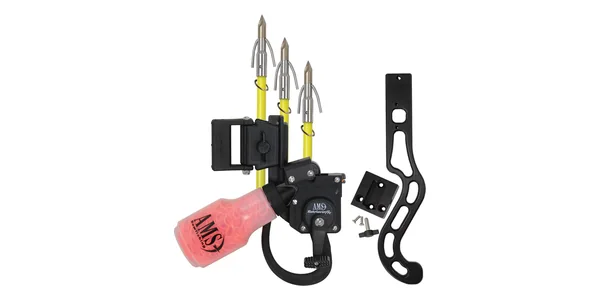
1. AMS Bowfishing Crossbow Carp Kit: best kit for your crossbow

AMS Bowfishing Crossbow Carp Kit

AMS is one of the best-known bowfishing brands, and this kit has everything you need to fit to a crossbow. You get AMS’s Retriever Pro bottle reel loaded with 25 yards of 200 lb braided Dacron line, the Sleek-X mount, and three 24-inch solid fiberglass Chaos FX bolts. Instead of a separate safety slide, the bolts use AMS’s Ring System, where the line ties to a ring on the shaft.

Fit is the thing to check. AMS says the mount fits crossbows with standard quiver mounting holes 1 5/16 inches apart (center to center). For a crossbow with a Picatinny rail, you need AMS’s M109-PCT adapter, sold separately. This listing is the right-hand version.

It was sold by a third-party seller and shipped by Amazon, with only 3 left. If you already have a mount, the AMS Retriever Pro reel is sold on its own.

Check price on Amazon

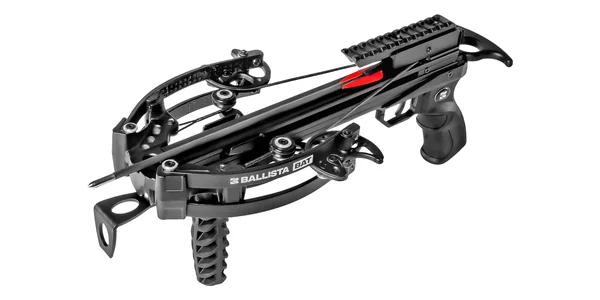
2. Ballista BAT: best compact crossbow for the water

Ballista BAT

A full-size hunting crossbow is a lot to swing at a moving carp. The BAT is a compound pistol crossbow that weighs about 2.5 lb and is about 16 inches long. Ballista rates it at 130 lb draw weight and up to 300 fps, plenty for fish at close range. It cocks with a pull rod, so follow-up shots are quicker than with a heavy hunting bow, and it’s also a fun target bow.

To fish with it, you need a kit. Ballista’s crossbow bowfishing kit includes a spincast reel, an aluminum reel mount with sleeve, a quick-release ring mount for 20 mm rails and three 16-inch fiberglass arrows. It was sold by a third-party seller. The listing says it fits the BAT and crossbows with a compatible 20 mm rail. Check your state’s rules on pistol crossbows as well as crossbow bowfishing.

The BAT was sold by a third-party seller and shipped by Amazon.

Check price on Amazon

The bottom line

Bowfishing with a crossbow is a fun way to spend a summer day on the water and a good way to remove invasive carp. Check your state’s rules first, set up a proper reel, line and fish arrows, keep the line in front of the bow, and aim low. The AMS Crossbow Carp Kit is the proven way to convert the crossbow you already own. If you’d like a light, dedicated bow for the water, the Ballista BAT with its bowfishing kit is an affordable option.

Looking for a hunting crossbow? See our best crossbows guide and our Barnett crossbow reviews.

Filed Under: Hunting Tips

Crossbow Hunting Qualifications and Safety Training: What You Need and Where to Find It

by Kenny Fox

There’s no single national license or qualification for crossbow hunting in the U.S. Each state’s fish and wildlife agency sets its own rules on who may hunt with a crossbow, when, with what equipment, and what training you need first. In Canada, the provinces do the same. This guide explains the kinds of requirements you’re likely to meet, where to find the official answers for your state, and the safety training that matters most.

We don’t list state-by-state rules here, because they differ and change often, and an out-of-date summary could get you fined. Always check the current regulations from your state agency before you buy a license or go hunting. This guide was last updated on October 4, 2026, and has no products or affiliate links.

The kinds of requirements you may face

Hunter education

Hunter education is the basic safety course for new hunters. According to a 2024 resolution of the Association of Fish and Wildlife Agencies, completing hunter education is used by all jurisdictions as a qualification for licensing and/or hunting. Who must take it depends on the state. Rules are often based on your age or the year you were born, and there may be exemptions or deferrals.

Bowhunter education

Some states also require a separate bowhunter education course to hunt during archery seasons or in certain areas. Whether that applies to crossbow hunters depends on the state and the season, so check the wording of your state’s rules carefully.

Crossbow-specific rules

Crossbows are often treated differently from vertical bows. Depending on the state, the rules can cover:

  • which seasons and dates crossbows may be used in, such as archery, firearms or special crossbow seasons;
  • who may use a crossbow during archery season, for example by age or with a disability permit;
  • equipment rules, such as minimum draw weight, minimum arrow length, broadhead type and width, and whether scopes or certain cocking devices are allowed;
  • how a crossbow may be carried, for example uncocked in a vehicle or in certain areas.

Licenses, permits and tags

You’ll usually need a hunting license plus any permits, stamps or tags for the species and season you’re hunting. Some states sell a separate archery permit that may or may not cover crossbows.

Mentored and apprentice hunting

Many states let new hunters try hunting under the direct supervision of a licensed adult before completing hunter education, often through an apprentice or mentored license. Rules on ages, limits and equipment vary.

Special areas

Military bases, some parks and other restricted areas may require extra permits, courses or a range qualification. Check with the land manager.

How to find your state’s official rules

  1. Go to your state wildlife agency’s website. Most publish a hunting regulations guide each year, with sections on hunter education, archery and crossbows.
  2. Find your state’s hunter education office. The International Hunter Education Association (IHEA-USA) keeps a list of hunter education administrators for every state, with the agency name and a contact.
  3. Read the current year’s rules, not a forum post or an old article. Check the date on anything you rely on.
  4. Ask the agency if anything is unclear, especially about crossbows in archery season, disability permits or equipment limits. Keep a copy of the answer.

How to take a course

Most states offer hunter education in several formats: a traditional classroom course run by volunteer instructors, an online course, or an online course followed by an in-person field day. Your state agency’s site lists which options it accepts and how to sign up.

  • Hunter education online: Hunter-ed.com offers state-approved hunter safety courses. It says they were developed with IHEA-USA and more than 45 state agencies, and its FAQ says the course typically takes about 4 to 6 hours, not counting quizzes and exams.
  • Bowhunter education online: Bowhunter-ed.com offers state-approved bowhunter safety courses approved by the National Bowhunter Education Foundation (NBEF) and IHEA.
  • Bowhunter education materials: the National Bowhunter Education Foundation promotes responsible bowhunting through education. Bowhunter-ed.com says its course was developed with NBEF, IHEA-USA and state agencies.

Make sure the course you choose is approved by your state, and finish any field day it requires. An online course alone may not be enough.

Hunting in another state

States have long recognized each other’s hunter education certificates. The same 2024 resolution notes that jurisdictions have a system of reciprocity and encourages continued acceptance of certificates from courses that meet IHEA-USA standards. Still, check the rules of the state you’re visiting, especially for bowhunter education, and carry proof of your certification. If you’ve lost your card, contact the state that issued it.

What good crossbow safety training covers

Whatever your state requires, these are the crossbow skills every course and every mentor should cover:

  • Safe carrying. Never walk with a cocked, loaded crossbow. Cock it only when you’re in position to hunt, and keep the safety on until you’re ready to shoot.
  • Cocking and unloading. Use a rope cocker or crank as the maker intends, and unload by shooting into a target or the ground, or with a de-cocking system. Never let the string down by hand.
  • Finger placement. Keep fingers and thumbs below the rail, out of the string’s path.
  • Tree stand safety. Wear a full-body harness, stay connected from the ground up, and raise and lower the crossbow uncocked on a haul line.
  • Shot selection. Know your effective range, be sure of your target and what’s behind it, and take only broadside or quartering-away shots at the vitals. Our guide to how deadly a crossbow is explains why.
  • Game recovery and ethics. Wait before tracking, follow the blood trail and make every effort to recover the animal.

Inspect your gear before each season and each hunt

  • Arrows: cracks, splinters, bent shafts or damaged nocks. Flex carbon arrows gently and discard any that crack.
  • String and cables: fraying, broken strands or worn serving. Wax as the manual says.
  • Limbs, cams and stock: cracks, chips or loose bolts.
  • Trigger and safety: they should work smoothly every time.
  • Broadheads: sharp, undamaged and covered in the quiver.

Tips for new and young hunters

Take hunter education even if your state doesn’t require it for you. It’s a good grounding in safety, ethics and the law. Practice with your crossbow until you can hit the vital area every time at your planned range, and hunt with an experienced mentor for your first season. For a smaller shooter, a lighter bow can make learning easier. See our youth crossbow guide, and our guide to crossbow types and brands for an overview of the options. If you plan to try bowfishing with a crossbow, remember that fishing rules are separate from hunting rules.

Common questions

Do I need hunter education just to buy a crossbow?

Hunting requirements apply when you hunt, not usually when you buy. Some states and cities do have rules on owning, carrying or shooting a crossbow, though, so check local law as well as hunting rules.

Is there a crossbow-only course?

Crossbow safety is usually taught within hunter or bowhunter education rather than as a separate course. If your state lists a crossbow course or permit, its agency site will say what’s required and which courses count.

What if I hunt in a group with youth hunters?

Check the supervision rules for youth and apprentice hunters, including how close the adult must stay and whether the adult needs a license.

The bottom line

Crossbow hunting requirements are set state by state and change often. Start with your state wildlife agency’s current regulations, take hunter education (and bowhunter education if your state requires it), and learn the crossbow-specific safety habits above. They’re what keep you, and everyone around you, safe in the field.

Ready to choose a crossbow? See our best crossbows guide.

Filed Under: Hunting Tips

Top Crossbow Comparisons

Top 3 Quick Picks

Best Bargain: Killer Instinct Boss 405

Best First Deer Bow: Barnett XP370

Fastest: CenterPoint Wrath 430

Buying Guide: How to Choose

© 2026 Best Crossbow Hunter
About · Contact · Disclaimer · Privacy Policy
As an Amazon Associate I earn from qualifying purchases.