If you want to know how to sight in a crossbow, the short version is: zero the top reticle at 20 yards, then check every other line at its distance. The details matter, though, because a crossbow scope is calibrated for one speed and one bolt weight. A loose ring or a bolt that is a few grains off will show up as a miss at 40 yards.
This step-by-step works for the usual crossbow scopes: multi-reticle scopes with fixed aiming lines or dots, and speed-dial scopes that move the lines to match your bow. Always follow your scope’s and crossbow’s manuals where they differ from this guide.
What you need
- Bolts that match. Use the bolts you hunt with, with field points of the same weight as your broadheads (usually 100 grains). Number them, so you can spot one that flies off.
- A target rated for your speed. A field-point bag is fine for the first groups. For the broadhead check you need a foam target rated for broadheads at your bow’s speed.
- A steady rest. A shooting bench with a rest or sandbags takes your form out of the test. Do not shoot off-hand while you zero.
- A safe range. Have a clear backstop, a measured 20, 30, 40 and 50 yards, and a plan to unload the bow when you are done.
Before the first shot
- Check that the rings and the mount are tight. Torque them to the maker’s spec if one is given.
- Set the eyepiece so the reticle is sharp, and set the magnification you will hunt with. On a speed-dial scope, set the ring to your crossbow’s rated speed, or to a chronograph reading if you have one.
- If the scope has a parallax or illumination setting, set it now so it does not change mid-session.
How to sight in a crossbow, step by step
Step 1: Get on paper at 10 yards
A new scope can be several inches off. Shoot one bolt at 10 yards using the top crosshair. If it hits the target, move back to 20 yards. If it misses, adjust before you move back.
Step 2: Zero the top reticle at 20 yards
Shoot a group of three bolts at the bull with the top crosshair. Measure from the center of the group to the bull, not from your best shot. Then turn the turrets: elevation moves the group up or down, windage left or right. Most turrets are marked with the direction the impact moves.
Check the click value. Many crossbow scopes list it at 100 yards, so at 20 yards one click moves the impact only one-fifth as far. That is why the first adjustment often takes a lot of clicks. Shoot another three-bolt group, adjust, and repeat until the group centers on the bull.
Step 3: Check the lower lines at 30, 40 and 50 yards
On a multi-reticle scope, each line or dot below the top one is meant for the next 10 yards: 30, 40, 50 and so on. Shoot a group at each distance with its line. Do not touch the turrets now. If a line hits high or low, note it, or use the line that fits. The lines are spaced for a certain speed, and your bow may be a little faster or slower.
On a speed-dial scope, leave the 20-yard zero alone. Shoot at 40 or 50 yards with the matching line, then turn the speed ring until that line hits. Check the in-between lines once more. Write down the speed setting that works.
Step 4: Confirm your broadheads
Field points and broadheads of the same weight should hit close together. Fixed heads are the most likely to wander. Screw your hunting heads onto the same bolts and shoot them into a broadhead-rated target at 20 yards and at your longest hunting distance. If they group with your field points, you are done. If not:
- Spin-test each head on its bolt and replace any that wobble.
- Try another bolt; some shafts just do not like broadheads.
- If the broadhead group is tight but in a different spot, zero with the broadheads instead and use practice heads of the same weight.
Need heads that fly well at crossbow speed? See our picks for the best crossbow broadheads.
A target for the job
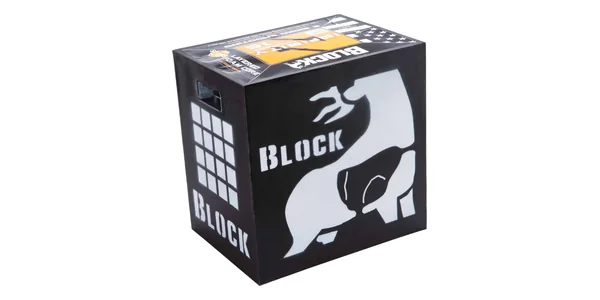
One foam target that stops both field points and broadheads saves you from buying two. The BLOCK Infinity Crossbow is a six-sided layered-foam cube rated for standard crossbow bolts up to 520 fps with field points and fixed or expandable broadheads. Its six faces spread out the wear, and it has a carry handle. The linked listing is the 16 x 16 x 16-inch size; a 20-inch version is also made.
It was sold by a third-party seller, with 9 left in stock when we checked on October 4, 2026.
Common sight-in problems
- Groups open up as you shoot. Check the scope rings, the rail and the string. A loose ring will move the zero with every shot.
- One bolt keeps missing. Spin it, check the nock and the insert, and set it aside if it still flies wild.
- The lower lines are all a little high or low. On a multi-reticle scope, your bow’s speed does not match the scope’s spacing. Learn which line fits each distance, or move to a speed-dial scope.
- The zero moves from day to day. Check for a stretching string or a cable that has crept. A string that has not been waxed or changed in a few seasons is a common cause.
When to re-check your zero
Shoot a few bolts after any trip in a vehicle, after a fall, after a string or cable change, and before every season. It takes 10 minutes and saves a lost deer. If you are thinking about a better scope, start with our guide to whether you need a crossbow scope and what kind to buy. For the rest of the setup, read what makes an accurate hunting crossbow.
Finish safely
Never dry-fire a crossbow, and never try to let the string down by hand. When the session is over, unload the bow by shooting a field-point bolt into the target or with your crossbow’s de-cocking system, as the manual says.
Target stock above was checked on Amazon on October 4, 2026, and it changes often. Specs are from the maker.