Best Crossbow Hunter

Crossbow Comparisons and Reviews

  • Home
  • Best Crossbows
  • Best Bargain
  • Reviews
    • Barnett Ghost 410
    • Excalibur Matrix 355
    • Barnett Jackal
    • Barnett Crossbows
    • TenPoint Crossbows
    • Parker Crossbows
    • Recurve Crossbows
    • Largest Crossbow Collection
  • Guides
    • Crossbow Scope
    • Most Accurate Crossbow
    • How Deadly Is a Crossbow?
    • Safety Training
    • Bowfishing
    • Jackal Crank Cocking Device
  • Bolts
  • Youth

Best Crossbow Cocking Devices: Rope Cockers, Cranks and De-Cocking Options

by Kenny Fox

A crossbow cocking device cuts the pull needed to draw the string, and it pulls both sides evenly. That second part matters as much as the first. A string drawn crooked by hand puts the bolt off center, and that costs you accuracy. Most hunters start with a rope cocker. A crank makes sense if you have a heavy bow, a bad shoulder, or you need to unload the bow without shooting.

The catch is fit. Rope cockers are mostly universal; cranks almost never are. The table below shows what fits which brand. Every device was in stock new on Amazon when we checked on October 4, 2026. Specs and fit notes come from the makers and the listings, and this is not a hands-on test.

Rope, sled or crank?

  • Rope cocker with hooks. Cheap, light and fits most bows. It cuts the pull by about half. The hooks can slip over the rail on very narrow bows.
  • Rope sled. Same idea, but a sled rides on the rail and does not slip. It is made for the rail of one brand.
  • Crank. Cuts the pull by 70 to 93 percent, depending on the model, and is quieter to use from a blind. It bolts to the stock, so it only fits certain models. Some cranks also let you lower the string under control.
  • Built-in systems. Some TenPoint and Wicked Ridge bows come with a crank built in (ACUdraw, ACUslide). ACUslide and the “De-Cock” models also let the string down safely. If yours has one, you do not need anything below.

Fit by brand

Your crossbowRope or sledCrank
BarnettBarnett Premium Rope Cocking Device (not Hyper Raptor)Barnett Standard Crank Cocking Device (check Barnett’s list)
TenPoint, Wicked RidgeTenPoint Rope Sled (not ACUslide models, Nitro XRT, XR-410 or Nitro X)Built in on ACUdraw / ACUslide models
CenterPointMost universal rope cockersCenterPoint Power Draw (MIL-SPEC buffer-tube models)
Excalibur recurvesExcalibur’s own rope aidExcalibur Charger EXT (TwinStrike, Micro, Bulldog)
Most other brandsTenPoint ACUrope or a universal hook rope (not ultra-narrow or reverse-draw)Ask the bow maker; universal cranks rarely fit right

1. Barnett Premium Rope Cocking Device — best basic rope
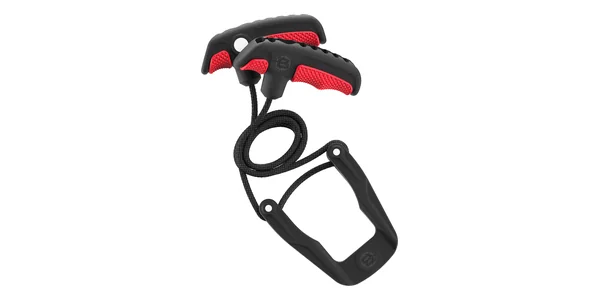
Barnett Premium Rope Cocking Device (hook style)

Barnett’s premium hook-style rope has a 50-inch rope, soft-touch diamond-knurl grips that lock together with a magnet, and cuts the cocking pull by up to half. Barnett says it does not fit its Hyper Raptor models. A sled-style version is also sold for bows where hooks slip.

It was sold by a third-party seller and shipped by Amazon.

Best for: Barnett owners and most standard-width bows.
Skip if: your bow is very narrow; get a sled instead.

Check price on Amazon

2. TenPoint ACUrope — best universal rope
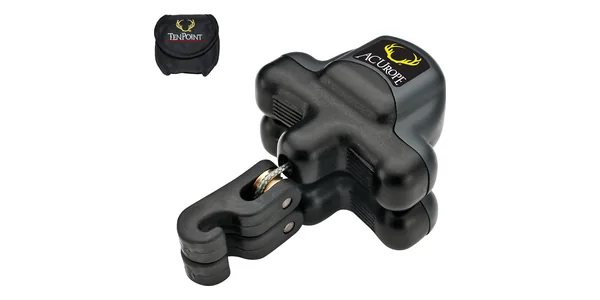
TenPoint ACUrope

The ACUrope works like any rope cocker, but when you are done, the cord winds back inside one grip, and the two grips lock into one small unit for a belt pouch. No loose rope to tangle in the stand. TenPoint uses Spectra 1000 cord and says it works on most crossbow brands, but not on ultra-narrow or reverse-draw bows.

It was sold by a third-party seller and shipped by Amazon.

Best for: treestand hunters who hate loose rope.
Skip if: you shoot an ultra-narrow or reverse-draw bow.

Check price on Amazon

3. TenPoint Rope Sled — for TenPoint and Wicked Ridge
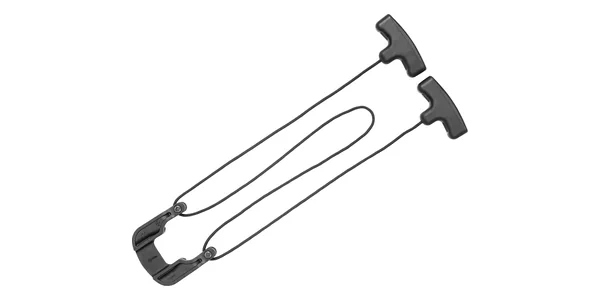
TenPoint Rope Sled

TenPoint’s narrow sled rides the rail instead of hooking the string beside it, so it does not hop over the rail of a narrow bow. It cuts the cocking effort by half. The Amazon listing says it fits TenPoint and Wicked Ridge crossbows except the ACUslide series, Nitro XRT, XR-410 and Nitro X; check TenPoint’s fit notes for your model. If you are still shopping for the bow, see our TenPoint crossbow reviews.

It was sold by a third-party seller and shipped by Amazon.

Best for: TenPoint and Wicked Ridge bows without a built-in crank.
Skip if: your bow has ACUdraw or ACUslide.

Check price on Amazon

4. Barnett Standard Crank Cocking Device — Barnett crank
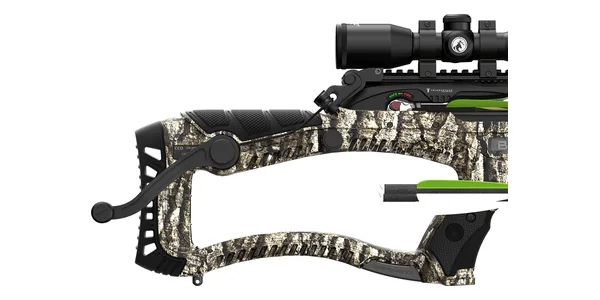
Barnett Standard Crank Cocking Device

Barnett’s standard crank mounts on the stock and cuts the cocking resistance by as much as 93 percent; the listing puts the force on the handle at about 13 pounds. Barnett says it fits most Barnett crossbows but not the Hyper Whitetail 410, and the listing names models such as the Raptor, Razr, Whitetail Hunter Pro, Whitetail Pro STR, Vicious and the Recruit line. Check Barnett’s full list before you order. Our Barnett Jackal crank guide explains why fit matters, and the Barnett crossbow reviews cover the current models.

It was sold by a third-party seller and shipped by Amazon.

Best for: Barnett owners who struggle with a rope.
Skip if: your model is not on Barnett’s list. Hyper models have their own cranks.

Check price on Amazon

5. CenterPoint Power Draw — CenterPoint crank
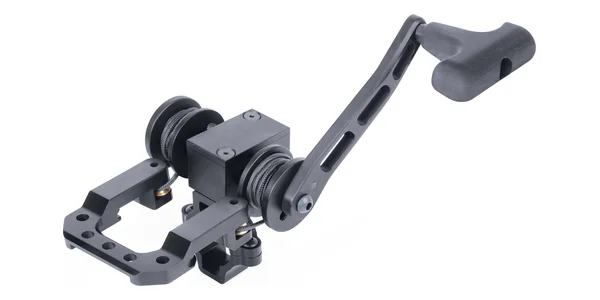
CenterPoint Power Draw Crossbow Crank

The Power Draw is made only for CenterPoint crossbows with a MIL-SPEC buffer tube, such as the Amped 425 and Sniper Elite 385. It cuts the draw weight by up to 70 percent, works from either side, and comes off to pack in a gear bag. CenterPoint lists models it does not fit, including the CP400 and the Specialist XL370, so check yours.

It was sold by a third-party seller and shipped by Amazon. Used units were also listed; our pick is a new one.

Best for: CenterPoint owners with a buffer-tube stock.
Skip if: you own any other brand.

Check price on Amazon

6. Excalibur Charger EXT — Excalibur crank that de-cocks
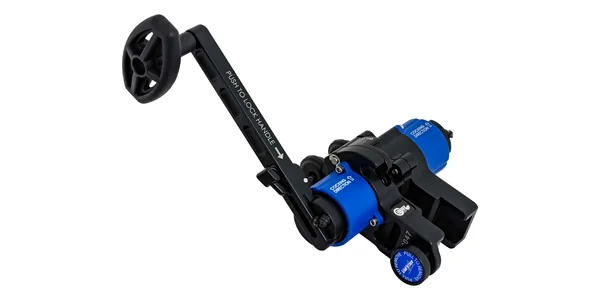
Excalibur Charger EXT

Excalibur says the Charger EXT brings the draw effort of its recurves down to as little as 12 pounds while keeping the string aligned. It comes off in seconds, has an ambidextrous removable handle and a spring-loaded cable that retracts, and is made of aluminum. With its Fail-Safe Strap, Excalibur says you can de-cock the bow quietly and safely. It fits the TwinStrike, Micro and Bulldog series; some older models can be retrofitted. If you shoot an older bow like the one in our Excalibur Matrix 355 guide, check Excalibur’s compatibility chart first.

It was sold by a third-party seller and shipped by Amazon.

Best for: Excalibur owners who want to cock and de-cock without a rope.
Skip if: your Excalibur is not on the chart.

Check price on Amazon

What about de-cocking?

A rope cocker cannot safely let the string down. Do not try it, and never lower the string by hand. Your options are a crank or built-in system that the maker says can de-cock, a de-cocking bolt shot into soft, rock-free ground, or a field-point bolt shot into a discharge target. Your manual says which ones are approved for your bow.

Tips that save strings and fingers

  • Pull both handles evenly, and watch that the string reaches the latch square on both sides.
  • Keep fingers and thumbs below the rail, away from the string path.
  • Put the safety on right away if your bow does not set it for you, and do not load a bolt until you are ready to shoot.
  • Store a rope cocker where it will not get wet or chewed. A frayed rope can snap mid-pull.

Stock above was checked on Amazon on October 4, 2026, and it changes often. Specs and fit notes are from the makers and the listings.
Filed Under: Accessories

Best Crossbow Broadheads for Deer (2026): Mechanical and Fixed Picks That Fly at 400+ fps

by Kenny Fox

The best crossbow broadheads are not just compound-bow heads in a bigger box. A modern crossbow throws a bolt at 400 fps or more, and that speed is hard on blade retention, ferrules and accuracy. A head that flies fine from a 280 fps compound can plane, open early or come apart when it leaves a fast crossbow.

Below are four crossbow-specific heads that were in stock new on Amazon with solid buyer ratings when we checked on October 4, 2026: one hybrid, one fixed blade, one front-deploying mechanical and one for Ravin owners. Specs come from the makers. We picked them on design, maker ratings and buyer feedback; this is not a hands-on test.

What matters in a crossbow broadhead

  • Built for crossbow speed. Crossbow versions usually have a stronger blade lock (spring clip, collar or tab) and a ferrule sized to the bolt. Use the crossbow model, not the vertical-bow version.
  • Retention at 400+ fps. A mechanical head has to stay closed in the quiver and in flight. Heads that use no rubber band or O-ring remove one thing that can fail on a fast bow.
  • Weight that matches your bolts. 100 grains is the standard for most crossbows. Keep the finished bolt at or above the maker’s minimum weight.
  • Same weight as your field points. Practice with field points of the same weight, then confirm the broadheads hit the same spot before the season.

Quick picks

  • Best hybrid: Muzzy Trocar HBX Crossbow
  • Best fixed blade: G5 Montec Crossbow
  • Best value mechanical: NAP Spitfire Crossbow
  • Best for Ravin crossbows: Ravin R100 Titanium

1. Muzzy Trocar HBX Crossbow — best hybrid

Muzzy Trocar HBX Crossbow Broadhead

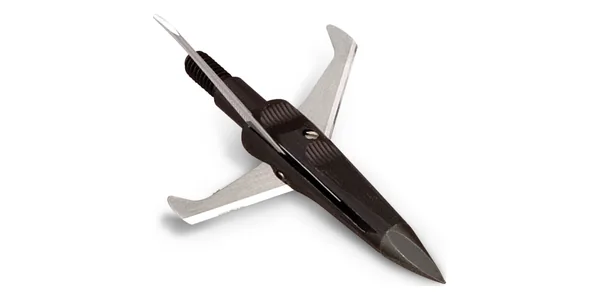
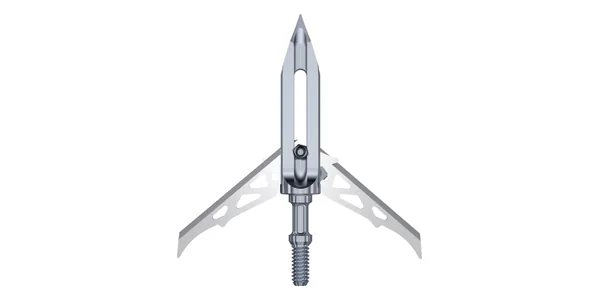
A hybrid gives you a fixed head’s first cut with a mechanical’s wide wound. Muzzy’s crossbow Trocar HBX has two offset 1-inch fixed blades and two 1-5/8-inch expandable blades, for 2-5/8 inches of total cut. It is 100 grains, with a stainless steel ferrule, a chisel tip and .035-inch blades, three to a pack. The offset fixed blades are there to spin the bolt in flight.

On Amazon the 3-pack was sold by a third-party seller.

Best for: deer hunters who want insurance if the mechanical blades open late.
Skip if: your state restricts expandable heads.

Check price on Amazon

2. G5 Montec Crossbow — best fixed blade

G5 Montec Crossbow Broadhead

The Montec is machined as one piece of steel, so there are no blades to come loose and nothing to replace. G5 lists a 1-1/16-inch cut, three cut-on-contact blades, 100% spin testing and edges you can sharpen again after a shot. The high-speed crossbow model comes in 100 and 125 grains; the Amazon listing linked here is the 100-grain 3-pack.

It was sold by a third-party seller.

Best for: hunters who want a simple, tough head that works where expandables are not allowed.
Skip if: your bolts group well with field points but you are not willing to check broadhead flight. Fixed blades are more likely to show a tuning problem.

Check price on Amazon

3. NAP Spitfire Crossbow — best value mechanical

NAP Spitfire Crossbow Broadhead

New Archery Products builds this Spitfire for high-speed crossbows. It is a three-blade, front-deploying head with a 1-1/2-inch cut and Diamize blades, sold in 100 and 125 grains with replacement blades and a practice head available. Spitfires hold their blades closed with NAP’s spring clip, so there is no rubber band or O-ring to forget. The linked listing is the 100-grain 3-pack.

It was the lowest-priced head here, sold and shipped by Amazon.

Best for: a proven mechanical head at a fair price.
Skip if: you want the widest possible cut; rear-deploying 2-inch heads cut wider.

Check price on Amazon

4. Ravin R100 Titanium — for Ravin owners

Ravin R100 Titanium Broadhead

If you shoot a Ravin, start with Ravin’s own heads. The R100 has a one-piece Grade 5 titanium ferrule and an internal spring clip, with no lock ring or O-ring. Its rear-deploying blades open to a 2-inch cut. It weighs 100 grains, comes three to a pack and is rated by Ravin as tested and approved to 500 fps. Ravin also makes steel (R101) and aluminum (R102) versions.

It was sold by a third-party seller, with only 5 left in stock when we checked, so supply may move.

Best for: Ravin owners, and anyone who wants a 2-inch mechanical rated well past 400 fps.
Skip if: you are on a budget; this is the most expensive pack here.

Check price on Amazon

Side by side

BroadheadTypeCutWeight
Muzzy Trocar HBX CrossbowHybrid, 4 blades1″ fixed + 1-5/8″ open100 gr
G5 Montec CrossbowFixed, one piece1-1/16″100 gr
NAP Spitfire CrossbowMechanical, front-deploying1-1/2″100 gr
Ravin R100 TitaniumMechanical, rear-deploying2″100 gr

Fixed or mechanical for deer?

Both kill deer cleanly when the shot is in the right place. A fixed head is simpler and tougher and is allowed everywhere broadheads are. A mechanical flies more like a field point and cuts a bigger hole, which helps the blood trail. The trade-off is one more moving part. A hybrid sits in the middle. If you are unsure how much energy a bolt really carries, our look at how deadly a crossbow is covers it. Whatever you shoot, check your state rules first; a few still restrict expandable heads.

100 or 125 grains?

Stick with 100 grains unless you have a reason not to. Most crossbows are set up around it, and most crossbow scopes are calibrated with it. A 125-grain head adds a little weight up front and a little momentum, but the bolt drops more, and you will need to re-check your zero. Before you change anything, check the minimum total bolt weight in your manual. Our guide to the best crossbow bolts explains how to count it.

Before opening day

  • Spin each head on the bolt. A wobble means a bad insert or a bad head, and it will show up at 40 yards.
  • Shoot your broadheads into a broadhead-rated foam target and compare them with field points. Our notes on what makes an accurate hunting crossbow cover the rest of the setup.
  • Keep the heads you practice with apart from the ones you hunt with, and replace any blade that hit something hard.
  • Still choosing the bow itself? Start with our best crossbow picks.

What we left off

The Rage Hypodermic Crossbow NC is a popular rear-deploying head, but the Amazon listing mixed specs from two different Rage heads, so we could not be sure which one ships. SEVR and Slick Trick crossbow heads had only a few left in stock. We will look at them again on the next check.

Stock above was checked on Amazon on October 4, 2026, and it changes often. Specs are from the makers.

Filed Under: Accessories

Crossbow Scopes: Do You Need One, How to Choose, and 4 Good Picks

by Kenny Fox

Most crossbows now come with a scope in the box, so the real question is usually whether the one you have is good enough, and what to buy if it isn’t. This guide explains what makes a crossbow scope different from a rifle scope, how to choose one, how to sight it in, and four scopes worth a look at different prices.

We haven’t tested these scopes ourselves. Specs come from the makers’ own product pages and manuals. Stock was checked on Amazon on October 4, 2026, and it changes often.

Do you need a crossbow scope?

You need some kind of sight, and for most hunters a scope is the best choice. A crossbow arrow drops a lot more than a bullet, so a crossbow sight needs separate aiming points for different distances. A good crossbow scope gives you those points, plus some magnification and better light in the first and last minutes of the day, when deer move most.

Your options are:

  • Red dot or multi-dot sight: no magnification, fast to aim, fine for shots out to about 30 yards. Many budget crossbows come with one.
  • Crossbow scope: usually 3x to 5x, with a reticle made for crossbow arrows. This is what most hunters should use.
  • Rangefinding scope: measures the distance and shows you the right aiming point. Very easy to use, but heavy and expensive.

If your crossbow came with a scope that holds its zero, is clear enough to see a deer at dusk, and has aiming points that line up with where your arrows land, keep it. Upgrade if it won’t hold zero, is too dim at first and last light, or its aiming points don’t match your bow’s speed.

How a crossbow scope differs from a rifle scope

  • Aiming points: a crossbow reticle has several horizontal lines or dots, usually 10 yards apart, so you can aim for 20, 30, 40 yards and beyond without guessing.
  • Speed calibration: those aiming points only work if they match your arrow speed. Some scopes are made for one speed. Others let you set your bow’s speed on the magnification ring.
  • Short-range settings: crossbow scopes have parallax and focus set for typical crossbow distances (Hawke’s are fixed at 50 yards, Vortex’s at 75) rather than rifle ranges.
  • Built for crossbow shock: a crossbow jolts a scope differently from a rifle, so makers build their crossbow scopes to handle that. Don’t swap in a cheap rifle scope and expect it to hold its zero.

How to choose a crossbow scope

Magnification

Most crossbow shots at deer are inside 40 yards, so you don’t need much. A fixed 3x or 4x scope is plenty. A low-power variable, such as 1.5-5x or 2-7x, is useful if you also practice farther out. The old version of this article mentioned scopes up to 32x. Ignore that: high magnification narrows your view and darkens the image, which is the opposite of what you want at dusk. On many crossbow scopes, the magnification ring is also the speed setting, so you leave it in one position once the scope is set up.

Reticle and speed range

This matters more than anything else. Look up your crossbow’s rated speed with the arrows you shoot, then pick a scope whose speed range covers it. A scope made for 340 fps won’t give accurate long-range aiming points on a 420 fps bow. If your bow is very fast, a scope that adjusts up to 425 or 450 fps is the safer choice.

Illumination

Red or green illumination makes the reticle easier to see against dark timber at dawn and dusk. Turn it down to the lowest level you can see, or it will glare. Some places have rules about lighted or electronic sights, so check your state’s regulations before you hunt with one.

Tube size and rings

Crossbow scopes use 1-inch or 30 mm tubes, and the rings must match. Some scopes come with rings, but many don’t. Check before you order, and make sure the rings fit your crossbow’s rail (most are Picatinny or Weaver).

Durability and warranty

Look for a scope that’s waterproof, fogproof and nitrogen-purged, with a warranty you can actually use. Hawke has a no-fault lifetime warranty on these models, and Vortex’s warranty is unlimited and unconditional. If you buy from a third-party seller, check that the warranty still applies.

How to sight in a crossbow scope

  1. Mount it solidly. Tighten the rings evenly and set the scope so you get a full view with your cheek on the stock.
  2. Set the speed. If the scope has a speed setting, start at your crossbow’s rated speed with your arrows.
  3. Zero at the distance the manual gives. It varies: Hawke’s XB scopes use a 20-yard zero, the XB1 manual calibrates the speed at 30 yards, and the Vortex uses 40 yards. Shoot three-arrow groups from a rest and adjust the turrets.
  4. Check every aiming point. Shoot at each distance you might hunt. If the lower points hit high or low, adjust the speed setting as the manual explains, not the turrets.
  5. Use your hunting arrows. Practice with arrows and points of the same weight as your hunting setup. A broadhead can hit a little differently from a field point, so shoot one before the season.

Our crossbow bolts guide explains arrow weight and nocks, and our guide to crossbow accuracy covers the other things that move your arrows around.

Four crossbow scopes worth a look

All four were in stock new on Amazon when we checked:

  • Best budget pick: Hawke XB 3×32 SR. Simple fixed 3x for bows near 340 fps, under $100.
  • Best value: Hawke XB1 1.5-5×32 SR. Adjusts for 250 to 425 fps, under $200.
  • Best overall: Vortex Crossfire II 2-7×32 Crossbow Kit. Covers 275 to 450 fps, rings included, under $200.
  • Easiest to use: Garmin Xero X1i. Measures range and shows the aiming point, over $1,000.

1. Hawke XB 3×32 SR: best budget pick

Hawke XB 3x32 SR

This is a simple fixed-power scope. Hawke calibrates it for 340 fps, with a 20-yard zero and aiming points every 10 yards out to 70 yards. The reticle has red or green illumination with five brightness levels, and a bracket that measures 17 inches, about the depth of a typical whitetail’s chest, to help you judge distance. It has a 1-inch tube, weighs 11 oz, and is 8.5 inches long.

The fixed calibration is the catch. It suits crossbows that shoot near 340 fps. On a much faster bow, the lower aiming points won’t line up. Rings aren’t included. It was sold by a third-party seller and shipped by Amazon, with 15 left.

Check price on Amazon

2. Hawke XB1 1.5-5×32 SR: best value

Hawke XB1 1.5-5x32 SR

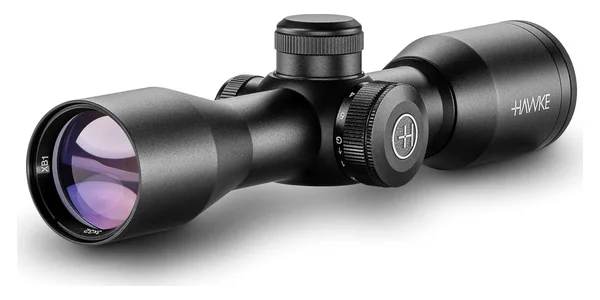
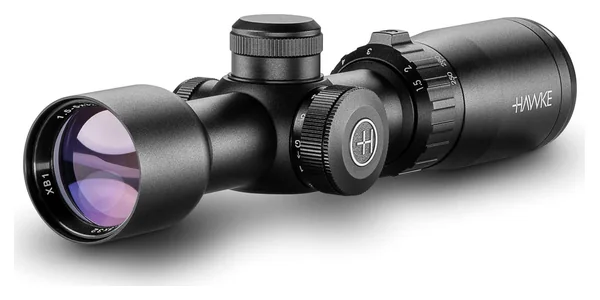
The XB1 fixes the 3×32’s main limit. Its magnification ring doubles as a speed selector from 250 fps (at 1.5x) to 425 fps (at 5x), so it can match almost any modern crossbow. The reticle has illuminated aiming points out to 60 yards and unlit marks from 70 to 100 yards. Hawke’s manual has you calibrate at 30 yards, after which the other points should line up as long as you leave the ring alone. It has a 1-inch tube, weighs 13 oz and is 8.3 inches long.

Rings aren’t included with this listing. It was sold by a third-party seller and shipped by Amazon, with 11 left.

Check price on Amazon

3. Vortex Crossfire II 2-7×32 Crossbow Kit: best overall

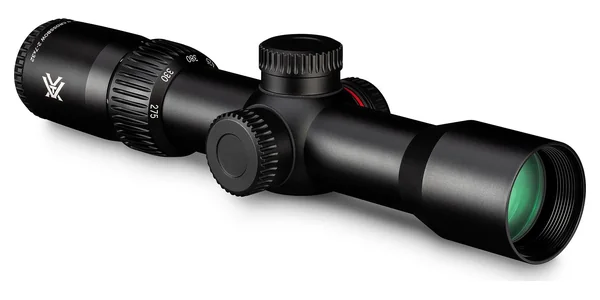
Vortex Crossfire II 2-7x32 Crossbow Scope

Vortex’s crossbow kit has the widest speed range here, 275 to 450 fps, which covers even very fast crossbows. Its XBR-2 reticle uses a 40-yard zero with holdover points from 20 to 100 yards and red or green illumination. The FPS setting is marked on the magnification ring. It has a 30 mm tube, weighs 14 oz and is 9.5 inches long.

It’s also the most complete package: two 30 mm rings, flip caps and a neoprene cover come in the box, so you don’t need to buy anything else. Vortex’s warranty is unlimited and unconditional. It had the most owner feedback of the four. It was sold by a third-party seller and shipped by Amazon.

Check price on Amazon

4. Garmin Xero X1i: easiest to use

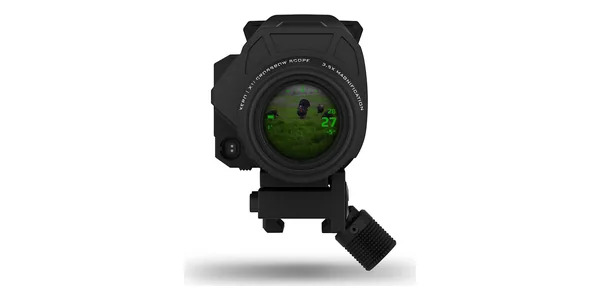
Garmin Xero X1i

The Xero X1i takes the guesswork out of distance. Press a button and its built-in laser rangefinder measures the distance (up to 250 yards on game, with angle compensation), then lights up the right aiming point. Once you set a 20-yard aiming point, it can calibrate the rest out to 80 yards from your bow’s speed, though Garmin says you should confirm accuracy at 50 yards. It has 3.5x magnification, mounts directly on Picatinny or Weaver rails and runs on two AAA lithium batteries.

The trade-offs are weight and price. At 1.9 lb, it’s more than twice as heavy as the other scopes here. Electronic and rangefinding sights aren’t allowed everywhere, so check your state’s rules first. It was sold and shipped by Amazon.

Check price on Amazon

The bottom line

A crossbow scope doesn’t need to be expensive. It needs aiming points that match your bow’s speed, enough light at dawn and dusk, and a mount that holds its zero. For most hunters, the Vortex Crossfire II kit is the one to buy. The Hawke XB1 does nearly as much for less, and the Hawke XB 3×32 is a good budget choice for bows near 340 fps. Buy the Garmin if you want the range measured for you and can live with the weight and cost.

Still choosing a crossbow? See our best crossbows guide, our TenPoint and Barnett reviews, or our guide to crossbow types and brands.

Filed Under: Accessories

Barnett Jackal Crank Cocking Device: What Fits and What to Use Instead

by Kenny Fox

If you own a Barnett Jackal and want a crank cocking device for it, here’s the short answer: Barnett never listed one that fits the Jackal, and we couldn’t find a reliable aftermarket crank made for it either. What does work is a good rope cocker, which halves the pull. This page explains why the cranks don’t fit, which rope cockers to buy, how to cock and unload the Jackal safely, and when a crank is worth it.

We haven’t tested these products ourselves. Compatibility information comes from Barnett’s own product pages, past and present. Stock was checked on Amazon on October 4, 2026, and it changes often.

Is there a crank cocking device for the Barnett Jackal?

No. Barnett’s crank cocking devices come with a list of the crossbows they fit, and the Jackal has never been on one. In 2015, while the Jackal was still on sale, Barnett sold two Power Stroke crank devices (for bows with power strokes up to 15 inches, and from 15 to 18 inches). They listed models such as the Quad, Wildcat, Panzer V, Ghost, Buck Commander, Penetrator, Vengeance, Recruit, Razr, Brotherhood, Raptor and BCX, but not the Jackal. Barnett’s crank for the Predator fit only the Predator and Revolution.

The current Barnett Standard Crank Cocking Device doesn’t list the Jackal either. Its list includes the Whitetail Hunter STR, Ghost 410, Ghost 360 and 375, Wildcat C6 and Recruit models. Even the old version of this page said the Jackal couldn’t take a Barnett crank.

Cranks from other brands won’t help. Excalibur’s Charger EXT is made for Excalibur crossbows, TenPoint’s ACUdraw is built into TenPoint and Wicked Ridge stocks, and CenterPoint’s Power Draw fits only CenterPoint stocks with its buffer tube. A crank needs to attach solidly to the stock in exactly the right place, and a poor fit can let a 150 lb string slip. Don’t drill, clamp or improvise a mount.

Rope cockers that work with the Jackal

A rope cocker is a cord with a handle at each end and either two hooks or a sliding sled in the middle. The cord runs behind the stock like a pulley, so you pull about half the draw weight: roughly 75 lb on a 150 lb Jackal. It also pulls both sides of the string evenly, which helps accuracy. Barnett’s own Jackal page didn’t list a cocking aid in the box, so if you don’t have one, it’s the first accessory to buy.

Both of Barnett’s current Premium rope cockers were in stock new on Amazon from third-party sellers, shipped by Amazon:

  • Best for most Jackal owners: Barnett Premium Rope Cocking Device (hook). Simple and light.
  • Easiest to keep centered: Barnett Premium Rope Cocking Device (sled).
  • Only if you upgrade your bow: Barnett Standard Crank Cocking Device. Doesn’t fit the Jackal.

1. Barnett Premium Rope Cocking Device (hook): best for most Jackal owners

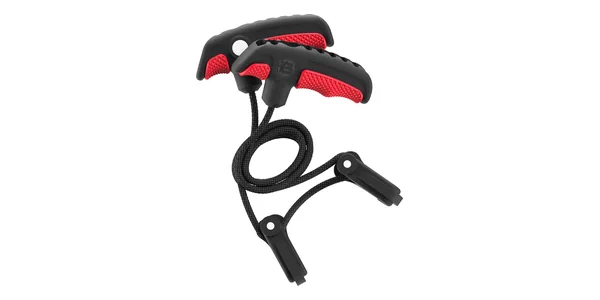
Barnett Premium Rope Cocking Device (hook style)

This is the classic design: a hook on each side catches the string next to the rail, and you pull both handles together. Barnett says it reduces cocking tension by up to 50%. It has a 50-inch rope and a magnetic lock to keep it tidy when it’s not in use. It folds small enough to keep in a pocket or pack.

It had the best owner feedback of the three. The hooks need to be placed evenly on each side of the rail every time, which takes a little practice.

Check price on Amazon

2. Barnett Premium Rope Cocking Device (sled): easiest to keep centered

Barnett Premium Rope Cocking Device (sled style)

Instead of two separate hooks, this version has a sled that rides along the rail and catches the string in the middle. That makes it easier to pull the string back straight, which is the main reason to choose it. Barnett gives the same up to 50% reduction, 50-inch rope and magnetic lock. Barnett says it’s compatible with most crossbows but not the Hyper Raptor. It doesn’t mention the Jackal by name, so check that the sled slides freely on your rail before you pull.

If you’re not sure the sled will clear your rail and scope mount, the hook version is the safer choice for a Jackal.

Check price on Amazon

How to cock a Jackal with a rope cocker

  1. Check the bow. Make sure there’s no arrow on the rail and the string, cables and limbs look sound.
  2. Point it down. Rest the front of the bow on the ground, pointing down and away from you, and put your foot all the way into the stirrup.
  3. Place the rope. Run the cord over the stock behind the trigger, where the manual shows. Then hook the string on each side of the rail, close to the rail. Barnett’s instructions say to keep the hooks facing up.
  4. Pull evenly. Stand up straight and pull both handles up together, using your legs and back. Keep the handles level so the string comes back square.
  5. Listen for the latch. The string should lock into the trigger and the safety should engage. Check both sides of the string are seated.
  6. Remove the cocker, then load. Take the rope off before you load an arrow, and only load when you’re ready to shoot.

If the string sits further back on one side than the other, your shots will drift. Don’t fire. Shoot it off into a target and cock it again more carefully.

How to unload a Jackal safely

A rope cocker can’t let the string down, and you should never try to do it by hand. With a Jackal you have two safe options:

  • Shoot it into a target. Load a field-point arrow and shoot into a target or soft ground you’re sure is safe. Many hunters carry one field-point arrow just for this at the end of the day.
  • Use a de-cocking bolt. These are heavy, blunt arrows made to be shot into soft ground. Barnett sells its own. Make sure the one you buy matches your bow’s arrow length (20 inches for the Jackal) and nock.

Never let the string down by hand or by holding the string and pulling the trigger. It can slip, hurt you, and damage the bow. And never shoot the bow without an arrow. A dry fire can crack the limbs or wheels.

When a crank makes sense

A crank cuts the effort to a few pounds, some models also let you de-cock without shooting, and it helps hunters with bad shoulders or backs, smaller hunters and young shooters. If a rope cocker isn’t enough for you, the honest fix is a different crossbow that takes a crank, not a homemade adapter for the Jackal. A Jackal is old enough now that it may be due for new strings and cables anyway.

Many current Barnetts work with Barnett’s crank, and some, like the XP370 and Recruit XP, are sold in versions with a crank built into the stock. Our Barnett Jackal owner guide compares four current replacements, and our Barnett crossbow reviews cover the full range.

3. Barnett Standard Crank Cocking Device: only if you upgrade your bow

Barnett Standard Crank Cocking Device

To be clear: this crank does not fit the Jackal. We include it because it’s the crank Barnett sells for its current bows, and it’s what you’d use if you upgrade. Barnett says it reduces cocking resistance by as much as 93%, so you turn the handle with about 13 lb of force. Its compatibility list includes the Whitetail Hunter STR, Ghost 410, Ghost 360 and 375, Wildcat C6 and Recruit models. Always check the current list for your exact model before you buy.

It was sold out on Barnett’s own store when we checked.

Check price on Amazon

The bottom line

There’s no crank cocking device for the Barnett Jackal, so don’t waste money on one that “should” fit. Buy a Barnett Premium rope cocker, use it with the hooks facing up and an even pull, and unload by shooting into a target or with a de-cocking bolt. If cocking is still a struggle, put the money toward a crossbow that takes a crank.

For more, see our crossbow bolts guide, our owner guides for the Barnett Ghost 410 and the Excalibur Matrix 355, and our best crossbows guide.

Filed Under: Accessories

Top Crossbow Comparisons

Top 3 Quick Picks

Best Bargain: Killer Instinct Boss 405

Best First Deer Bow: Barnett XP370

Fastest: CenterPoint Wrath 430

Buying Guide: How to Choose

© 2026 Best Crossbow Hunter
About · Contact · Disclaimer · Privacy Policy
As an Amazon Associate I earn from qualifying purchases.